
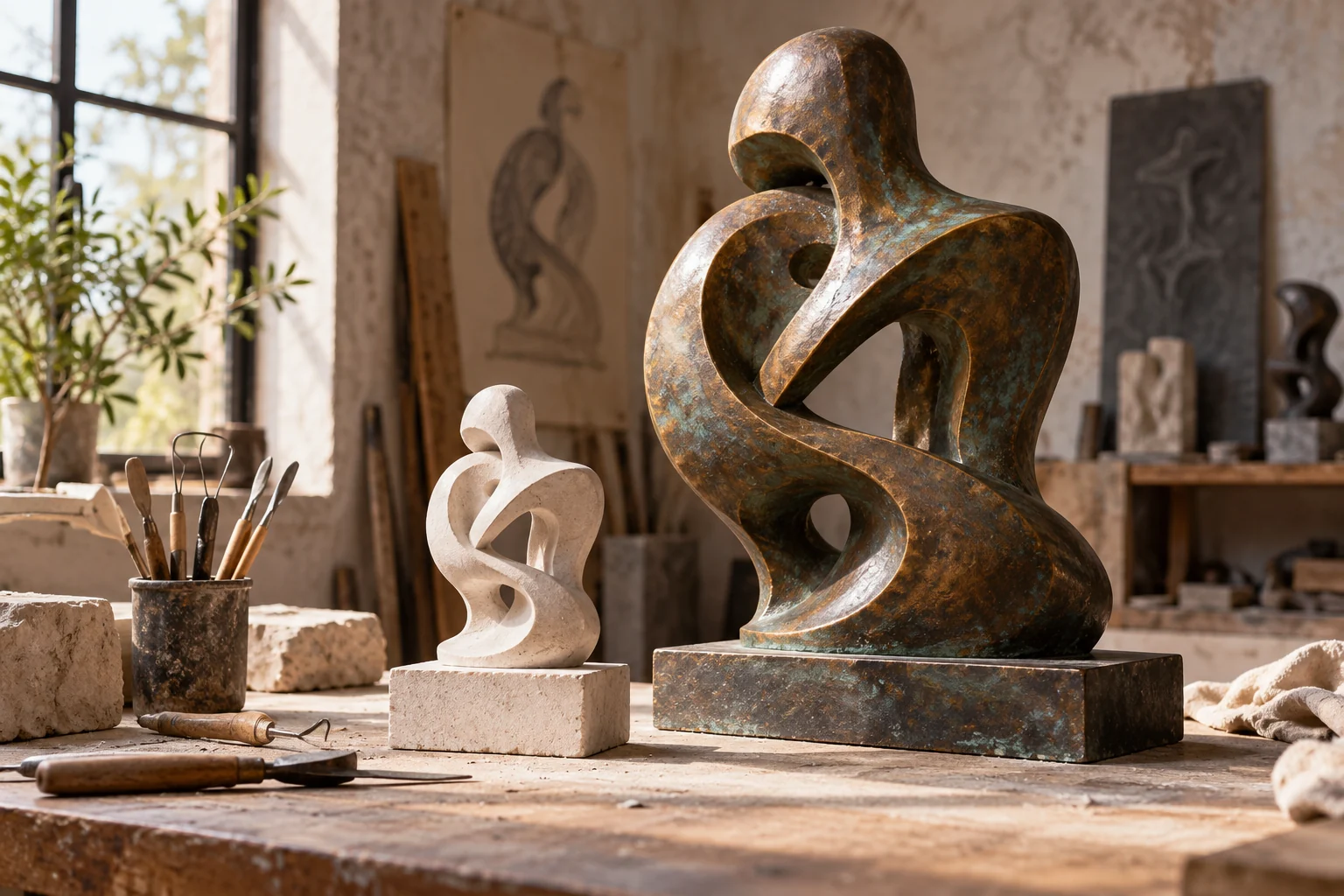
Stating only the height may not explain a custom sculpture project fully. Form, detail, setting, material and delivery expectations also need assessment.
Avoid comparing a ready-made product price directly with a bespoke commission. Establish which design, production and site works are expected first. This guide explains scope rather than inventing price figures.
Is overall height enough? Consider width, height and depth together. A simple volume and a detailed figurative work of the same height can have different design and production requirements.
It also matters whether the work will be seen from several directions or one particular point. Site photographs and placement expectations help assess scale in the real setting. Include any plinth in the overall appearance.
What can a design fee cover? Concept development, drawings, volume presentations and revisions can be agreed for the project. Do not assume all are in one quotation.
Discuss how presentations will be assessed and who gives final approval. Clarify the scope of form changes after production approval. Compare prepared deliverables rather than only the final visual.
Why specify materials and finishes separately? Colour, texture and finish guide production decisions. Similar-looking works do not necessarily use the same method or have the same cost.
Explain indoor or outdoor use, contact and maintenance expectations. Without actual materials and methods, do not promise a standard lifespan or maintenance-free use. Assess suitability through technical information.
Are transport and installation included? Transport from production to delivery, site access and fixing can be separate items. A plinth, ground works and surrounding alterations are not automatically part of art production.
Technical specialists should verify installation suitability. Plan delivery dates alongside design approval and site readiness. A general completion promise is unsuitable for an unassessed project.