
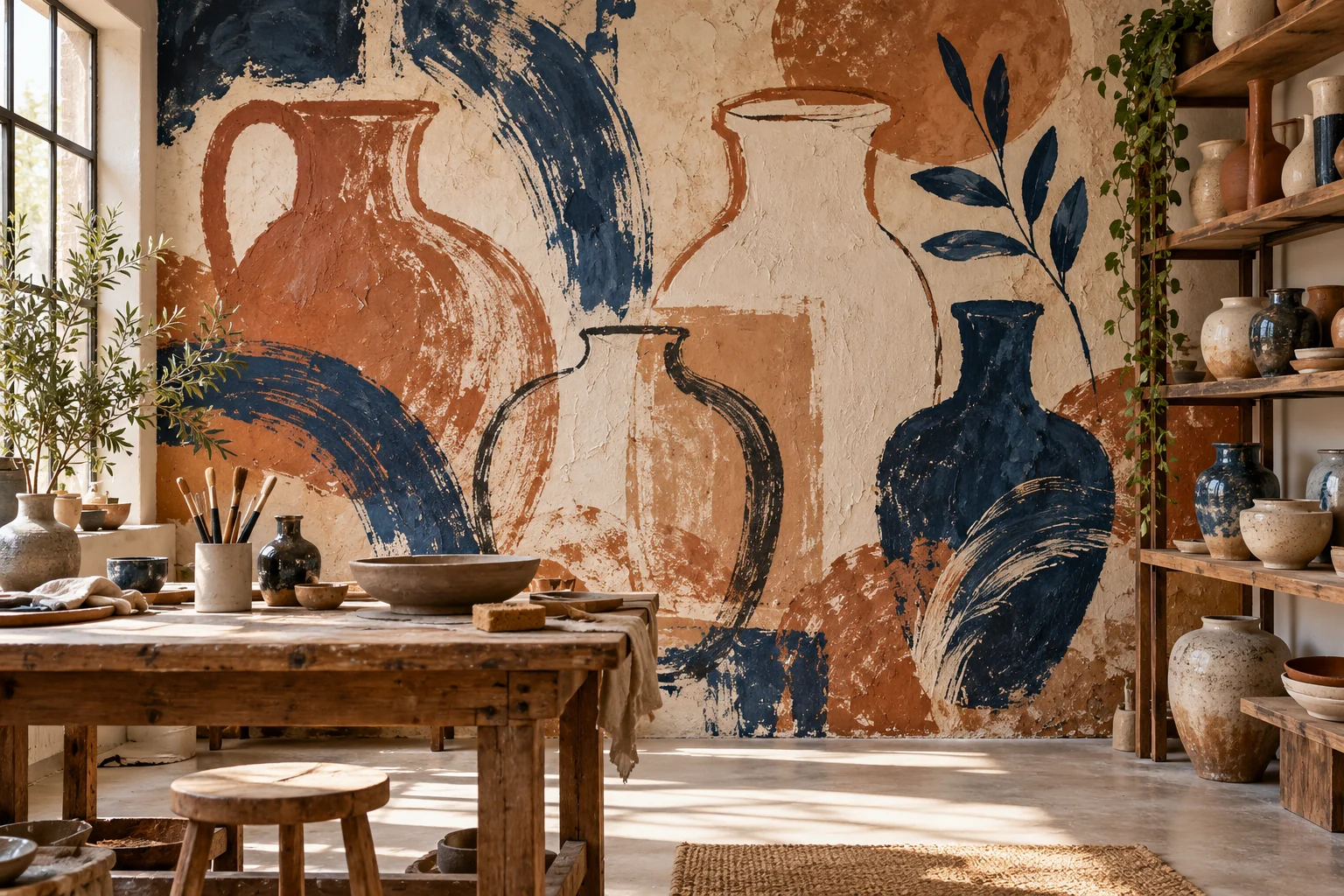
For a ceramics studio mural in Eskisehir, explain daily production as well as the visitor’s view. Working benches and display shelves serve different purposes.
First establish which surface is proposed. Assess the artwork within a scope that does not interfere with technical equipment or production requirements. This article is not a ceramics production safety guide.
Work area or display wall? In a display area, assess the image alongside the objects. Behind a workbench, equipment and everyday items may conceal the wall.
Share general photographs, layouts and approximate dimensions. An empty-wall image does not explain every aspect of later use. Describe which area’s appearance the mural should support.
How can making be interpreted visually? Studies of form, lines and original interpretations of objects can provide a starting point. The studio’s works need not be reproduced literally on the wall.
Verify rights before using other artists’ work. If the studio’s own designs are references, identify approved images. Discuss whether the mural should contrast strongly with exhibits or offer a quieter background.
How should conditions be explained? Share the responsible team’s information about cleaning, contact and surrounding activities. Verify the system’s suitability through actual products and technical conditions.
Do not assume an art application is suitable for every studio zone. Relevant people should assess proximity to technical equipment and other restrictions. A visual presentation cannot replace suitability approval.
How is the schedule planned? State teaching, production and visitor hours. Discuss responsibilities for preparation and protection separately. Do not promise a standard duration before knowing project conditions.
Graffiti Ankara is based in Ankara; no Eskisehir branch or completed project is claimed. Share studio photographs and your mural idea on WhatsApp. Discuss the design and application scope together.