
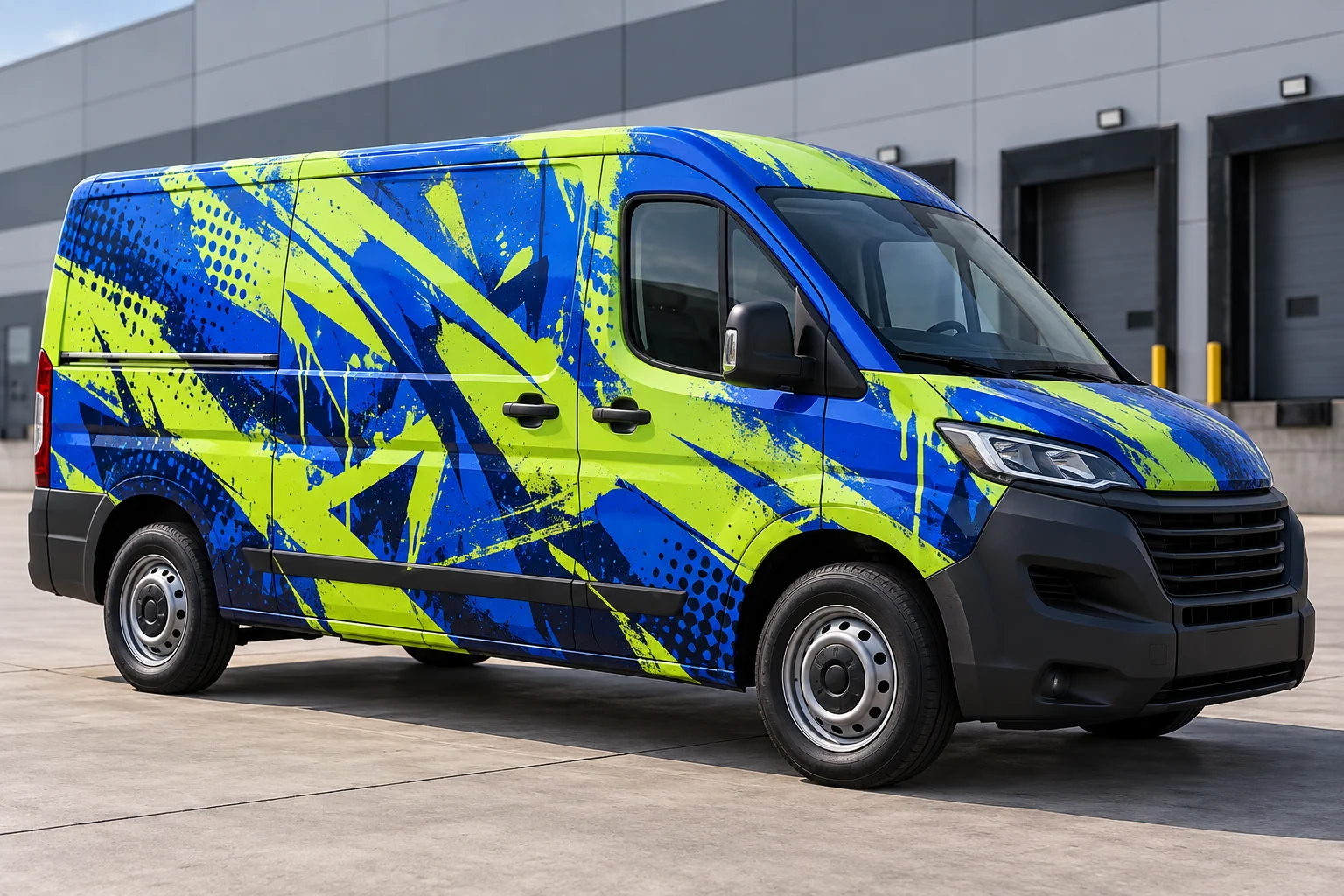
Explore camper exterior design
A commercial panel van offers a broad side surface for graphics. Sliding doors, body joints and existing fittings affect how the design appears.
Doors may remain open for long periods during service work. A composition that only works when closed may therefore be insufficient. Assess the graphics alongside everyday operation.
What is concealed when the sliding door opens? Door movement can change the appearance of text or important images. Share open and closed photographs at the start.
Do not assume all vans have the same construction. Body length, roof options and door arrangements affect the design area. Verify that a general drawing matches the actual vehicle.
How do side and rear views differ? The brand name, main image and contact information may have different priorities on different surfaces. Every element need not be repeated everywhere.
Consider rear-door divisions and handles within the composition. Preserve required markings, lights and number plate visibility. Qualified people should verify technical and regulatory suitability; a design presentation is not a substitute.
What operational information is useful? Explain how the van is used for servicing, deliveries or other work. Mention any planned equipment at the start.
Show accessories, existing lettering and surface condition in photographs. A screen presentation alone cannot demonstrate physical feasibility. Assessing paint or an existing wrap is a separate task.
Can several vans share one design? A shared visual language is possible, but simply scaling a design may not work across vehicles of different dimensions. Explain the adaptation scope for each model.
Discuss design deliverables, production files and application separately. Do not assume printing, film production or installation is included. Learn the intended installer’s file requirements early.