
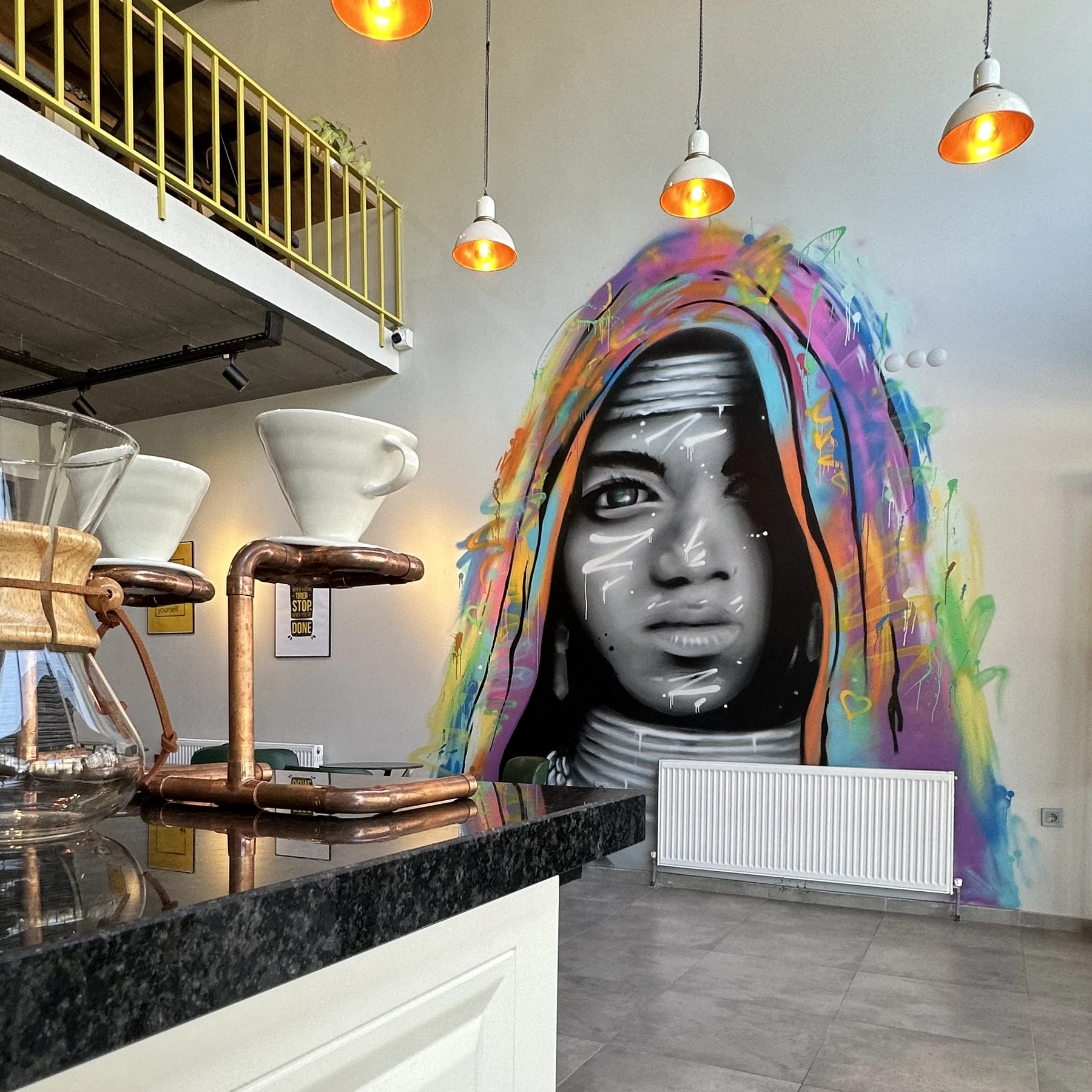
A mural brings more than colour to an architectural project. Its scale, placement and relationship with surrounding materials determine how it is perceived in the space. Planning a mural therefore involves more than choosing an image for an empty wall shortly before installation.
Early communication between architects, interior designers and art practitioners allows design decisions, surface preparation and the working schedule to be considered together. What information is useful when beginning this collaboration?
At what stage should mural design become part of the project?
Not every project follows the same sequence. It can nevertheless be useful to start discussing the mural once the wall’s location, core material decisions and intended use are becoming clear.
The design does not need to be fully resolved at this point. Defining its role is enough to begin: will it create a focal point at the entrance, connect a long surface or tell the brand’s story?
If shelves, screens or lighting will later occupy part of the wall, this should be known during design development. Early coordination helps the composition respond to these elements.
What project information should be shared in the first discussion?
A clear project brief helps align expectations. Alongside technical drawings, short descriptions of how the space will be used are valuable.
The following documents and information can help with the initial discussion:
- A plan showing the wall’s position.
- A dimensioned elevation or approximate surface dimensions.
- Photographs of the existing area.
- A material and colour palette.
- The lighting approach.
- The purpose of the space and its intended users.
- Brand identity files, if available.
- The current project stage and target schedule.
Identify decisions that are not yet final. This makes it clear which information the design is based on and which changes could affect it.
How does the mural relate to the materials in the space?
A composition can look different when assessed on a screen and when seen in its intended setting. Wood, stone, metal, textiles and existing wall textures affect the perception of colour and form.
Harmony does not always mean repeating the same colours. Some projects benefit from continuity with surrounding tones; others may call for a controlled contrast.
Colour decisions
Choosing a mural’s colours may involve more than the brand palette. Large surfaces, furniture and lighting conditions also need to be considered.
If a brand colour must be used, discuss its proportion and role within the composition. Rather than filling every surface with it, decide where it can create a meaningful accent.
Texture and surface decisions
A rough surface, joints or a combination of materials can affect the execution and appearance of fine details. The proposed design should therefore be considered alongside the surface’s actual condition.
Establish from the start that a change of surface may require the design to be reviewed.
How does lighting affect a mural’s appearance?
Daylight, directional lighting and different times of day can change the way a mural is perceived. Some parts of the composition may remain bright while others sit in shadow.
The position of light fittings, reflections and surface texture should form part of the assessment. If a particular portrait, word or detail needs emphasis, communicate that expectation.
Where possible, photographs taken at different times of day can support the initial review.
Which viewing angles should guide the composition?
Someone standing directly in front of a wall does not see the same image as someone approaching from the entrance. Seated users may also view the work from a different height from standing visitors.
Look beyond the wall’s flat elevation to the places where people move and pause within the space.
Useful questions include:
- Where will the work first be seen?
- Will it be read at close range or from a distance?
- Will fixed or movable furniture stand in front of it?
- Could a door, column or equipment interrupt the composition?
- If lettering is used, from what distance should it be legible?
These questions help establish the work’s scale and level of detail.
Graffiti or mural: how do you clarify the style together?
“Grafiti” and “graffiti” can describe lettering, characters and other visual approaches. “Mural” and “wall painting” refer to painted works on architectural surfaces. These areas can overlap.
Instead of choosing a style name in the first conversation, explain what appeals to you in the references. Is it the colour, line work, quiet composition or use of a portrait?
Reference images help establish a shared language. The aim is to develop an approach for the project, rather than reproduce another artwork.
How should design, approval and execution responsibilities be defined?
A productive collaboration needs clarity about who takes part in each decision. A business owner, brand representative, architect and production team may contribute on different matters.
Design approval
Identify who will approve the concept, composition and colours. If several people provide feedback, consolidating their comments can help avoid conflicting directions.
The project scope should also define revision stages and how changes after approval will be handled.
Surface and site preparation
Discuss tasks such as preparing the wall, clearing the working area and ensuring the necessary access separately.
Responsibilities for surface repairs, electrical work, protection of fixed furniture and access equipment should not be left unclear.
How should mural execution fit into the construction schedule?
The timing of the mural needs to be planned alongside work continuing around it. Dust-producing tasks, installations in front of the wall and later work on the surface may affect the sequence.
Assess the surface, design and site conditions before committing to a duration. If the business is operating, working hours and access are also part of the plan.
Share the intended opening date in the first conversation. Do not assume the working schedule is final before design approval and site preparation are complete.
What design relationships can you examine in an actual project?
In Graffiti Ankara’s portrait mural for Pizza Sapore, the venue’s warm material palette was one of the starting points. Layered forms and colour accents around the portrait were considered in relation to the wooden surfaces.
This example helps illustrate how a mural can be understood through its relationship with materials and setting, rather than as an isolated image.
How do you begin a project discussion with Graffiti Ankara?
Graffiti Ankara works on murals and wall art, relief and sculpture, vehicle design and installations. Architects and interior designers can be design partners, depending on the project.
For an initial conversation with the Ankara-based studio, share the location, approximate dimensions, available drawings and target schedule. Projects outside Ankara are assessed according to their scope and site conditions.
Let us consider the area you have set aside for art. Share your drawings, surface photographs and a short project brief with Graffiti Ankara via WhatsApp.