
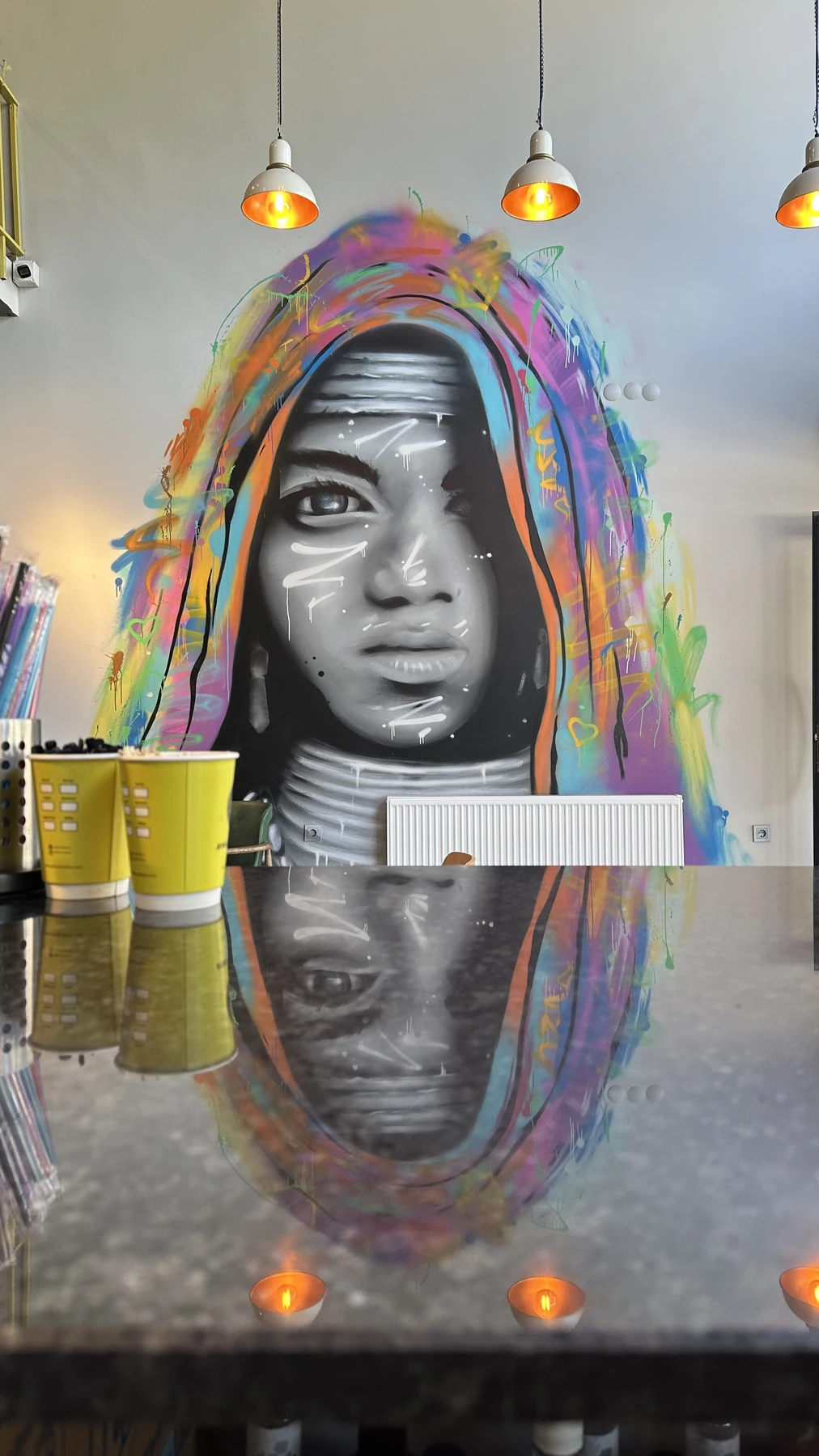
A dance studio mural in Samsun may be viewed directly and in mirrors. Lessons, rehearsals and filming can use the same surface differently.
Define the role first. Entrance branding, a filming corner and an original studio narrative are different needs. The design need not extend across every surface.
Which areas do the mirrors reflect? Show the wall’s relationship to mirrors in photographs. Assess reflected typography especially carefully.
Approval based only on a flat wall view may be insufficient. Share the entrance, lesson viewpoints and camera angles together. Mention any planned mirror relocation.
How can movement inform the design? Original lines, rhythmic forms and interpreted figures can provide a starting point. A dance style need not be expressed through one visual cliché.
Explain whether you like poses, drawing style or colours in references. Verify rights before using figures from photographs or other works. Develop an original approach suited to the studio’s character.
How is camera framing checked? Solo and group filming reveal different areas. Assess what falls behind participants and the composition’s weight within the frame.
Artwork does not automatically include camera, lighting or sound infrastructure. Do not assume increased sharing or views. Coordinate design through specific views that address filming needs.
How should equipment and use be protected? Show barres, storage and required signs in drawings or photographs. Application should not obstruct circulation or movement. Confirm technical and operational suitability with the responsible people.
Discuss preparation, lesson breaks and reopening separately. Graffiti Ankara is based in Ankara; Samsun projects are assessed according to conditions. Share photographs, approximate dimensions and your idea on WhatsApp.