
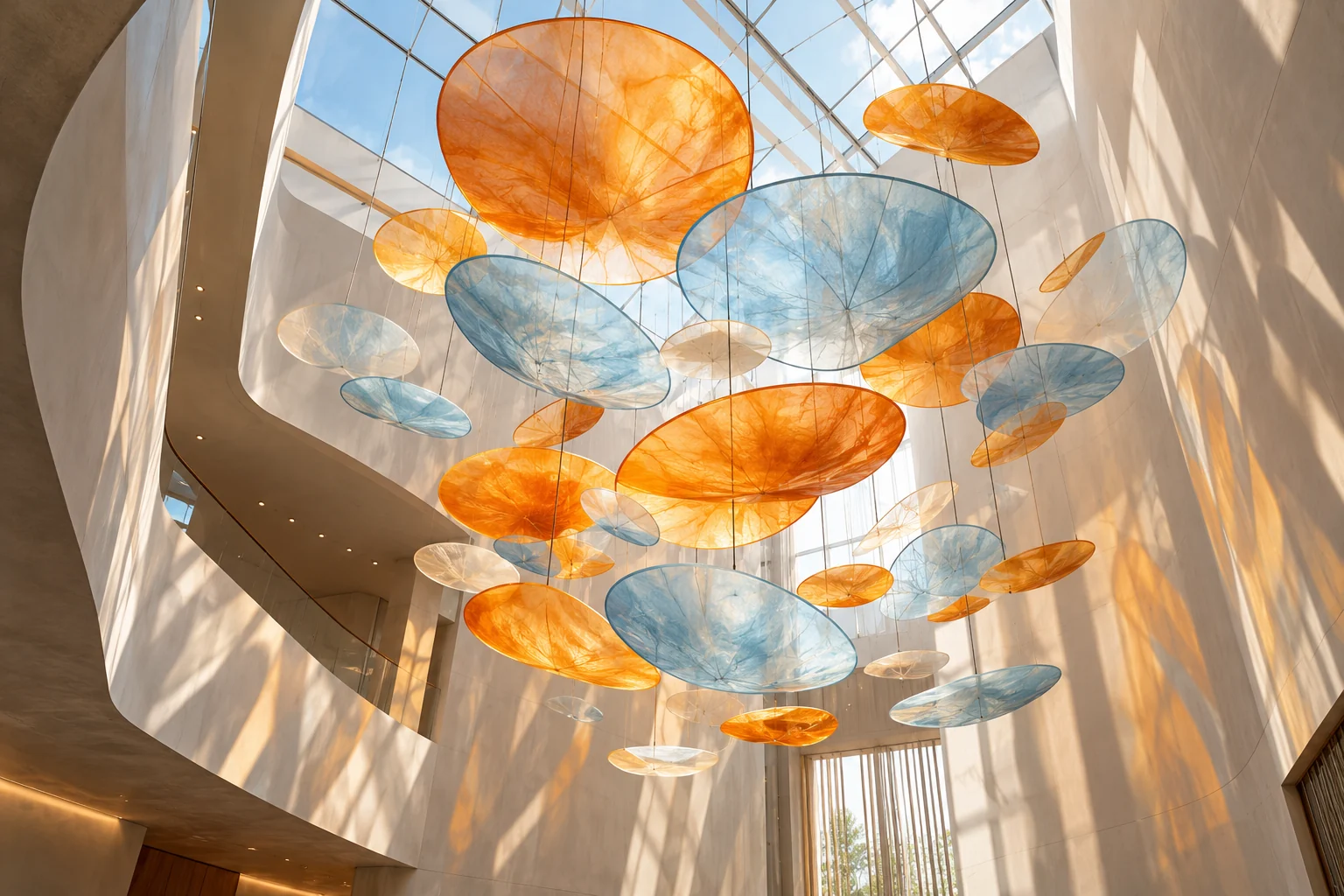
Artwork in the upper part of a space can create a visual relationship independent of the floor. Forms at different levels, viewpoints and empty areas may all become part of the design.
An image showing suspended forms does not prove feasibility in a real building. Artistic concepts, support, installation and suitability for use require separate expertise and responsibilities.
From which viewpoints will the design be read? Views from the entrance, below and different floors can change the composition. Share where people move and pause.
Assess the forms’ scale and relationships through those views. One rendering cannot demonstrate every spatial effect or technical condition. Actual dimensions and existing elements must inform the assessment.
What site documents are useful? Plans, sections, general photographs and technical limits set by authorised teams provide a starting point. Document ceiling systems, equipment and access conditions.
Do not assume suitable load-bearing or suspension points exist. Relevant qualified specialists must assess them. This guide does not provide load calculations, fixing choices or installation instructions. Do not derive technical decisions from a concept image.
How does the work relate to building systems? Consider lighting, ventilation, required signs and other systems. Artwork must not obstruct their function or access.
For a lighting effect, clarify who supplies each component. Installation art does not automatically include electrical or building-system modifications. Coordination with the relevant teams is necessary.
How should installation and later use be considered? Qualified teams should plan access, preparation, inspection and possible dismantling. Discuss cleaning and maintenance access at the start.
Forms that appear light do not remove the need for technical approval. Avoid unverified claims about materials, production or support. Do not present a concept as ready for construction if technical suitability cannot be established.
What can you request from Graffiti Ankara? Share photographs, drawings, the intended effect, date and project-team information. First confirm the artistic design and possible coordination scope; do not assume specific suspension or engineering services.
Share your spatial art idea on WhatsApp, and assess the scope and required team relationships together.