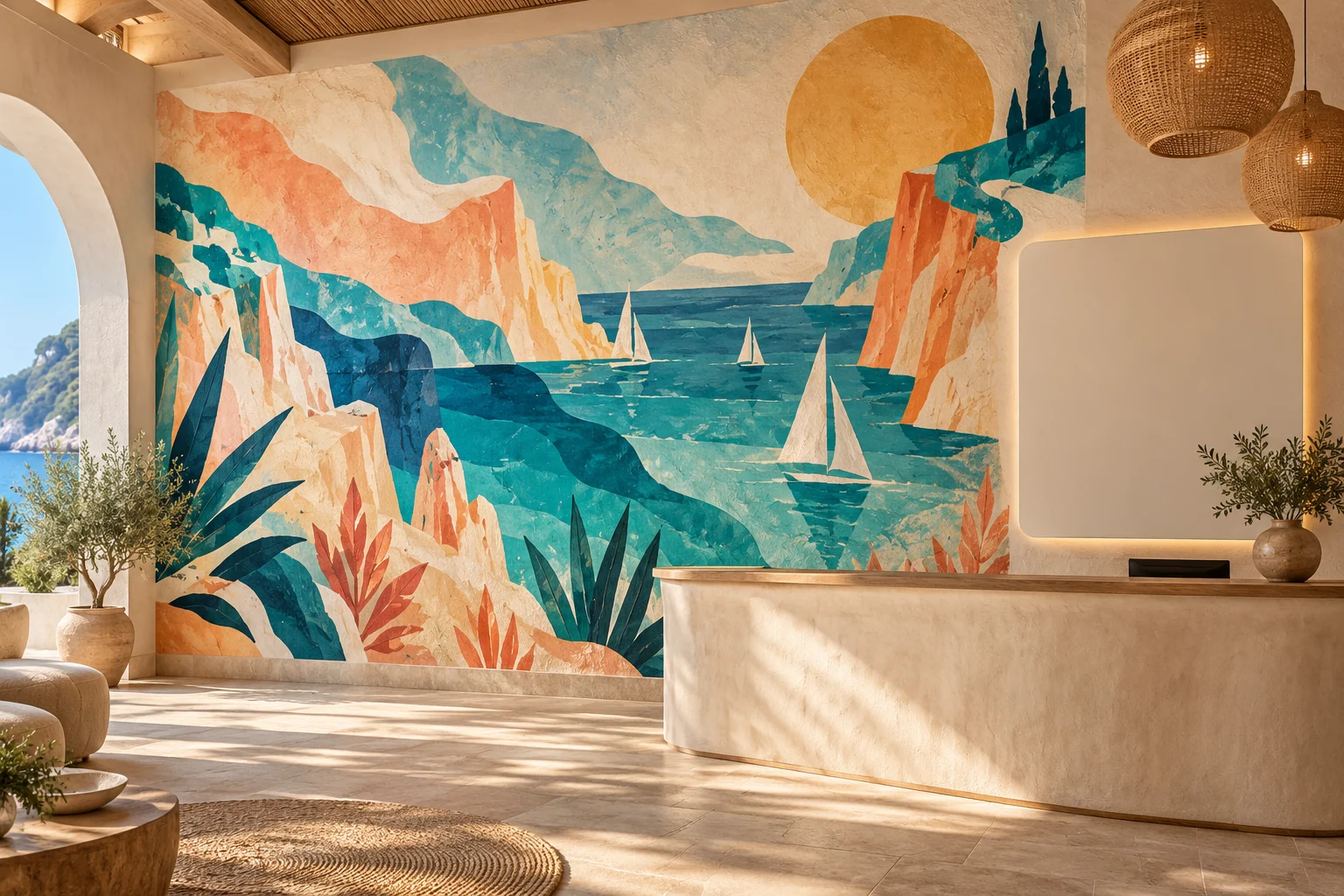
A mural can support the story of a tourism information space welcoming visitors in Antalya. Artistic expression and current visitor information are not the same thing.
Verify routes, maps and historical narratives separately. Artwork on a wall cannot be assumed to keep every transport or visiting detail current. Distinguish permanent and changeable content first.
What role will the wall play? A reception atmosphere, a particular narrative or a waiting-area focal point are possible aims. Explain the priority in the brief.
Show desks, brochure stands and information screens in photographs. Artwork must not make essential information harder to read. Establish who can approve which area at the start.
How should local elements be used? Verify sources and narratives for specific places, buildings and cultural subjects. Familiar landmarks need not be placed together in every tourism setting.
Abstract forms and original lines can offer a less literal approach. This article discusses a design scenario; it does not report a completed project or local customer request at an Antalya institution.
Where should multilingual wording sit? Choose the languages used on the physical surface according to visitors. The institution should approve translations and place names.
Long explanations inside a mural and separate information panels are different choices. Before combining changeable prices, hours or routes with permanent art, discuss update responsibilities. Artwork does not replace a wayfinding system.
What helps an initial assessment? Share site photographs, dimensions, approved narrative sources and the current information layout. Clarify design, preparation and application scopes separately.
Graffiti Ankara is based in Ankara; no Antalya branch or completed project is claimed. Share your space and intended subject on WhatsApp. The request can be assessed according to scope and site conditions.