
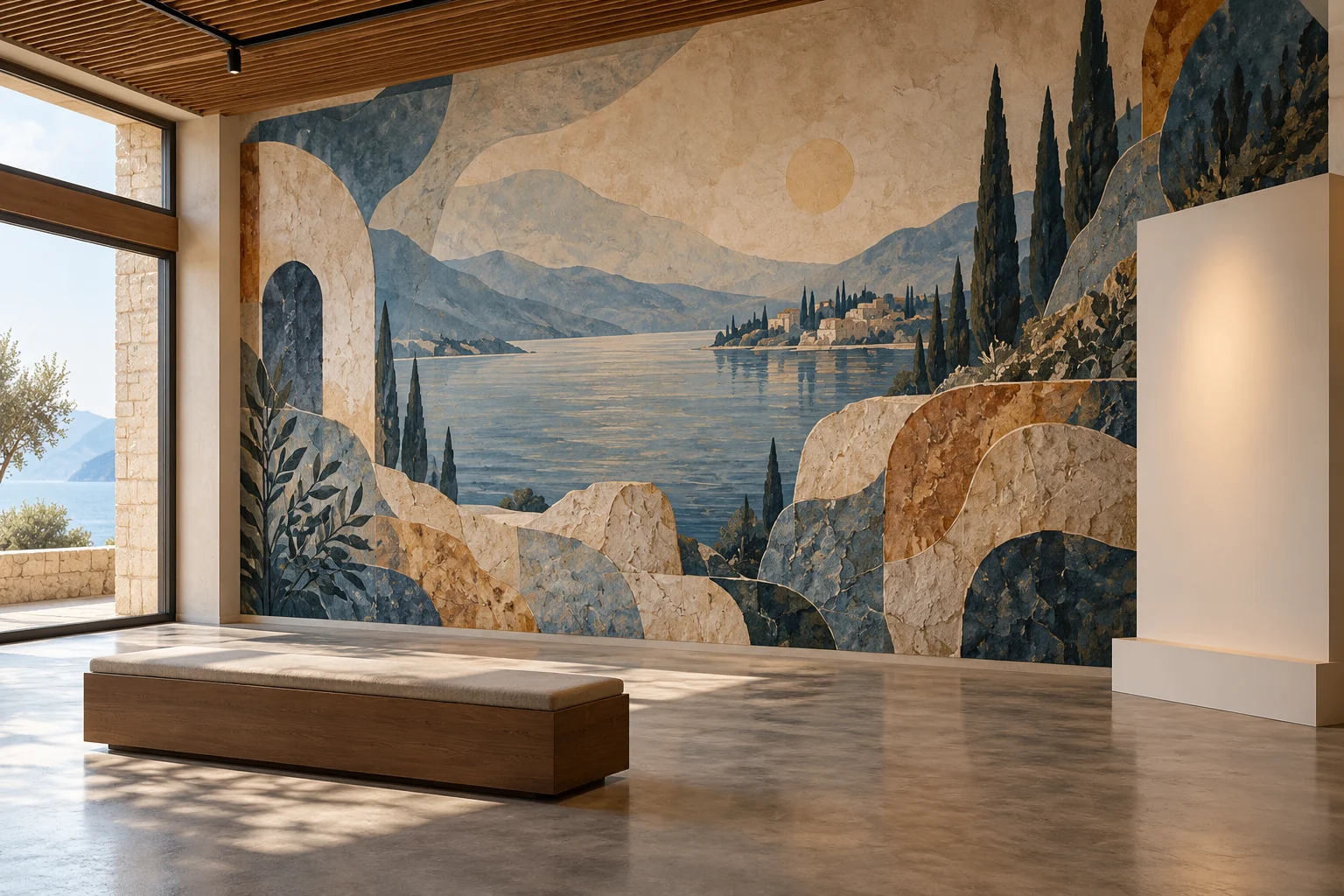
For a visitor centre mural in Canakkale, information sources matter as well as visual impact. Artistic interpretation and verified narrative require different assessments.
This guide does not describe a completed institutional or historical commission. It explains who should approve content during design. A city name is not a reason to invent stories without sources.
Should narrative boundaries come first? Explain the focus and exclusions. All available information need not fit onto one wall.
Share approved institutional texts and visual sources. Identify the current version and the person responsible for content. Producing a mural does not mean the artist has independently verified every statement.
How do realistic scenes differ from abstract interpretations? Check references and rights for specific people, places and events. Make the basis of images that appear documentary clear.
Abstract compositions are also possible. Where needed, identify representative imagery as such. Do not use later captions to present invented details as facts. The approval process should preserve that distinction.
How do information panels and murals work together? Permanent art and changeable explanations can occupy separate surfaces. Assess text density, viewing distance and visitor movement together.
Content specialists should check translations, names and dates. A mural does not replace essential wayfinding or accessible information systems. Preserve their visibility.
Which teams should join the first discussion? Content specialists, institutional representatives and the existing design team can contribute different information. Assess technical surface suitability separately from content approval.
Start with photographs, approximate dimensions, sources and a target period. Ankara-based Graffiti Ankara assesses Canakkale requests according to project conditions. Share the approved brief on WhatsApp.