
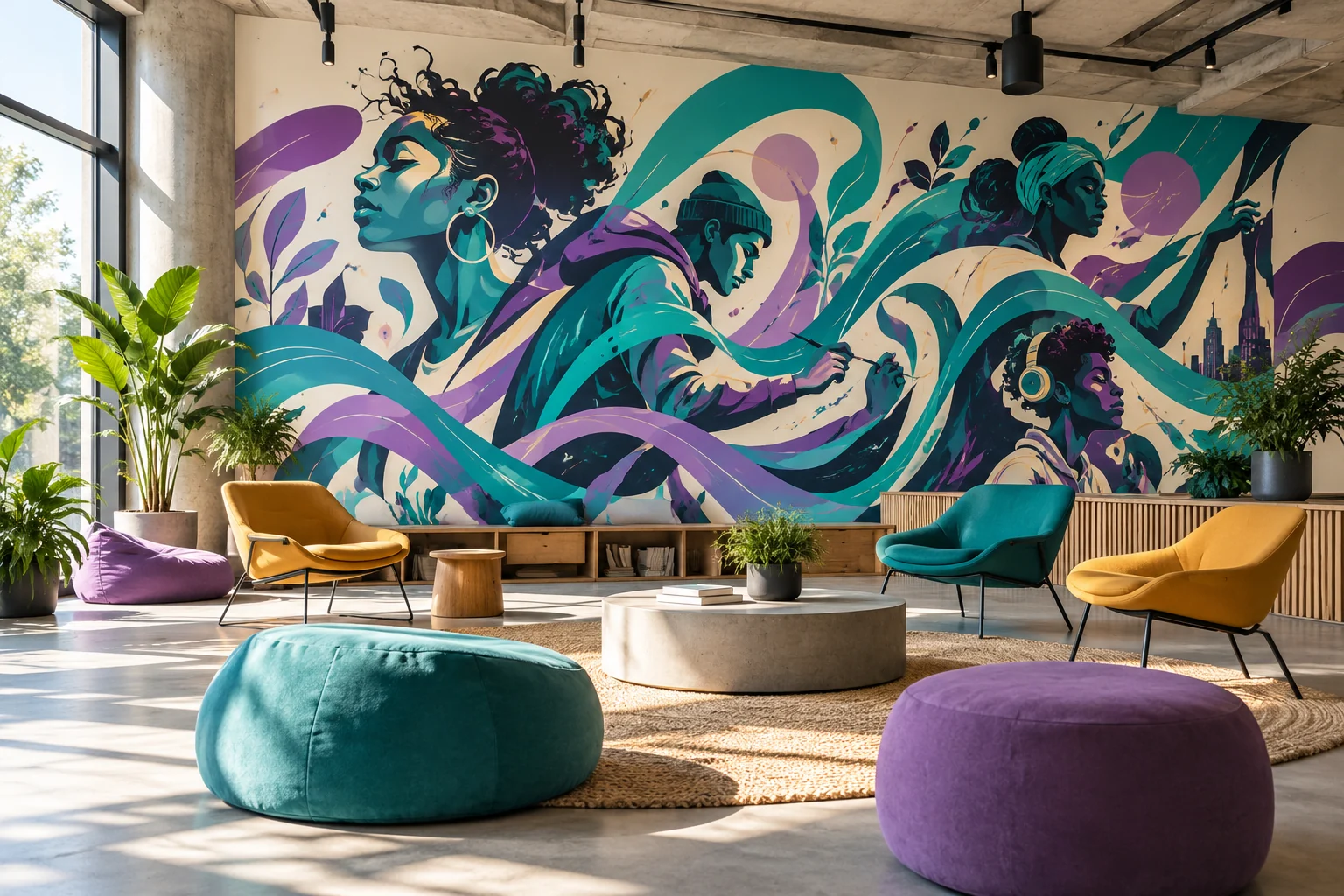
Ideas from users can provide a starting point for a youth centre mural in Diyarbakir. Adding every suggestion to one surface is not the same as defining a shared design goal.
Identify the area and the institution’s expectations first. This guide explains how ideas can become a brief; it does not imply that participatory painting, education programmes or workshops are offered.
How can user ideas be gathered? The institution can share collected themes, words and visual references. Identify approved suggestions and content that must be excluded.
Combining feedback in one project summary can help. Every different request need not fit in the same composition. Make clear who approves final content and visuals.
How does everyday use affect the design? Talks, recreation and other events may change furniture arrangements. Explain which wall areas stay open and where they are seen from.
Treat required signs and notice areas separately. Permanent art need not carry changing programme information. Assess visual density alongside actual use.
How should names and personal content be handled? Clarify rights and permissions for participants’ drawings, names and photographs. Holding the material does not establish unrestricted promotional usage.
Assess visibility of personal information when sharing the work. Do not promise participation, learning or other social outcomes without measurement. Describe artistic goals concretely.
What documents help the first conversation? Share photographs, approximate dimensions, an approved theme summary, layouts and a target schedule. Plan preparation and use of the area separately.
Graffiti Ankara is based in Ankara; this article claims no completed institutional project in Diyarbakir. Send the brief on WhatsApp, and assess the request according to scope and site conditions.