
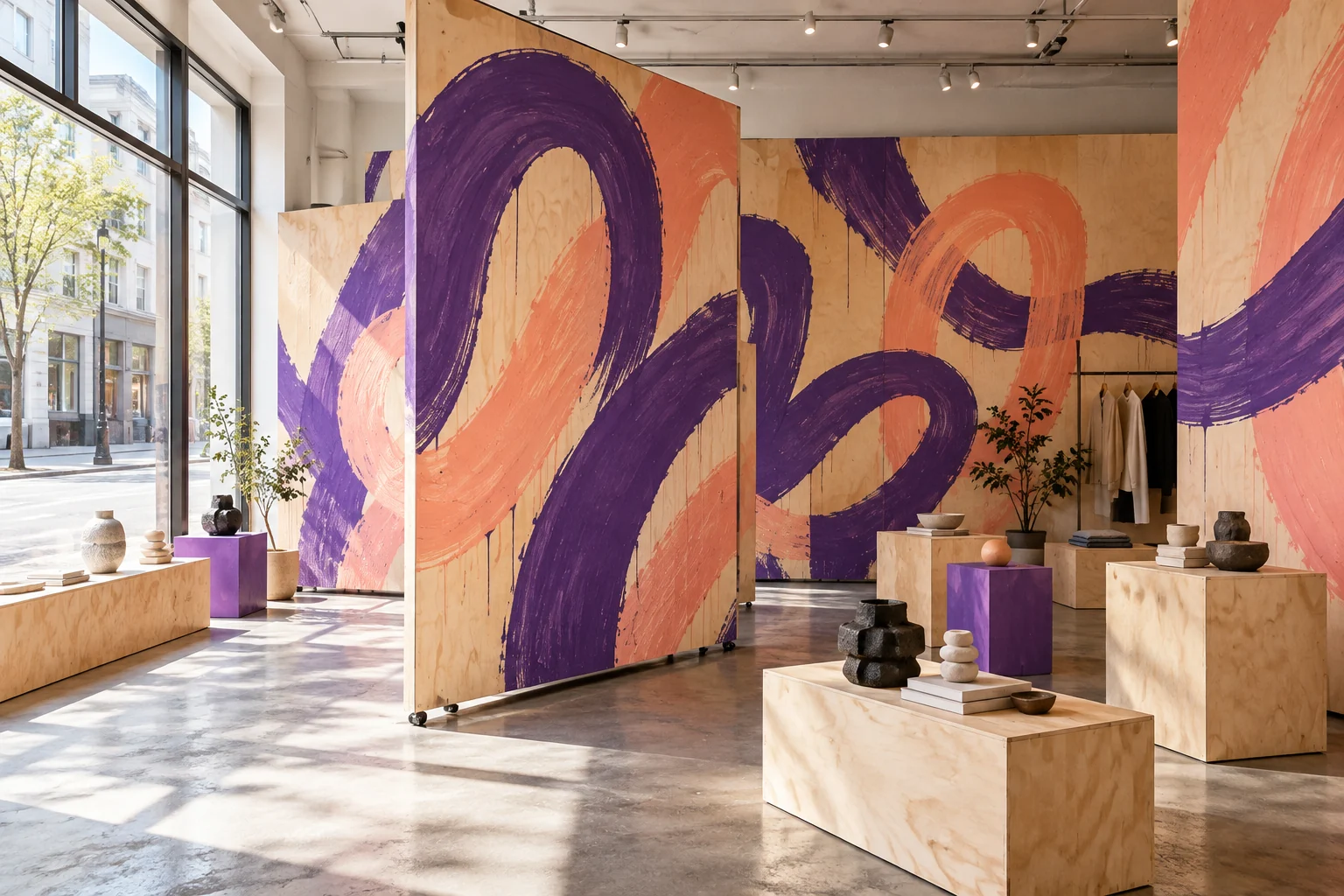
For a short-term pop-up in Istanbul, consider a mural alongside the period of use. The venue’s return conditions matter as much as its appearance on opening day.
Direct application to a wall and a design on a separate surface create different responsibilities. Do not assume either option before clarifying property-owner and organisational conditions.
How must the surface be returned? Ask about permission to alter the wall and the expected condition on handover. Temporary does not mean every application is easy to remove.
If dismantling, repainting or preparation is needed, establish who undertakes it. Qualified people should assess methods and product suitability. Do not guarantee mark-free removal on an unexamined surface.
Is the design for one campaign or an ongoing brand? Artwork based on one product or short message differs from a mural expressing the wider brand. Approve campaign dates and wording before design.
Every piece of information need not appear on the wall. Separate changeable elements from the lasting visual narrative. Check rights to logos, photographs and illustrations separately.
How should photography and the overall space be balanced? Consider different viewpoints and how the image appears behind visitors. Designing only for a close photograph may not explain the wider spatial relationship.
Taking photographs does not guarantee social sharing or sales. Assess intended results through separate measurement. Artwork must not obstruct necessary directions or everyday use.
What matters most in a short schedule? Share the date, installation window, surface-readiness date and approval contact. A quick opening does not resolve design and site conditions automatically.
Graffiti Ankara is based in Ankara; this article claims no Istanbul branch or ready local team. Send site photographs, the period of use and handover expectations on WhatsApp. The project can be assessed according to scope and site conditions.