
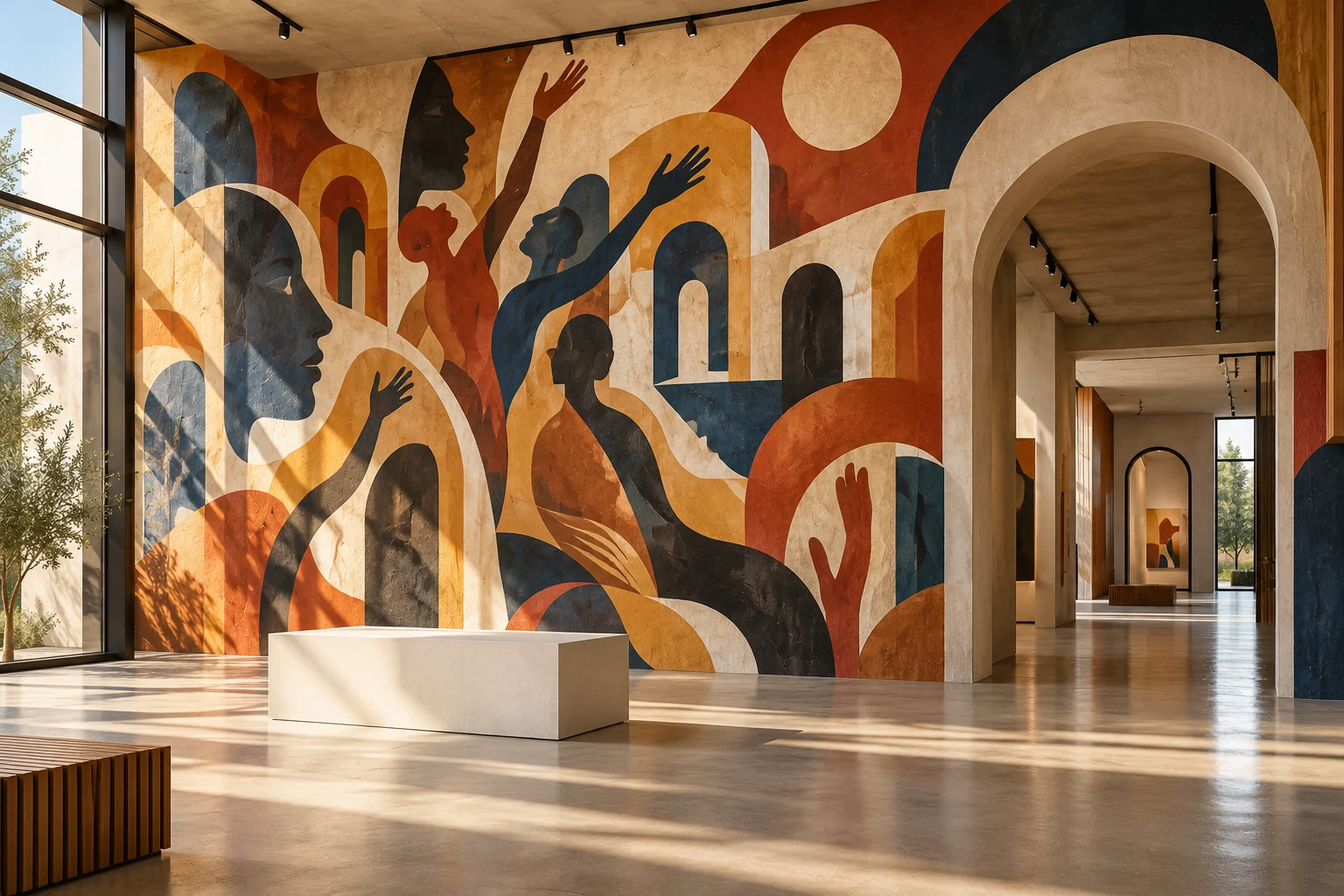
When considering a mural for a Konya cultural centre, explain how exhibitions, talks and other programmes change the space. Permanent art must be assessed alongside changing event arrangements.
First identify the surface and its role. Foyers, reception and passageways may require different decisions. Do not assume every wall should be assigned to a permanent mural.
How can a permanent mural relate to temporary exhibitions? Panels, posters and movable stands can conceal parts of a wall. Assess ordinary-day and event-day layouts together.
A strong contrast with exhibits and a quieter relationship are different preferences. Approving only an empty-room composition may not explain later use. Include the range of programmes in the brief.
How should an institutional narrative be verified? Check sources and permissions for artists, historical subjects and local elements. Keep official institutional information distinct from artistic interpretation.
A Konya title is not a reason to invent unverified local cultural stories. This article is a project scenario and does not imply a partnership with a particular institution. Original design can be developed from approved information.
Which teams should contribute? Management, programme coordinators and the existing design team may hold different information. Establish how feedback will be combined and who gives final approval.
Content approval and surface or application suitability are separate. Relevant specialists should conduct necessary technical assessments. Approval of an art presentation does not resolve every site condition.
When should application be considered? Share exhibition changeovers, maintenance and other preparation schedules. Discuss the relationship between the work area and protected artworks or equipment. Duration can be assessed once design and surface conditions are clear.
Send plans, photographs and programme needs on WhatsApp. Assess your Konya request with Ankara-based Graffiti Ankara according to scope and site conditions.